Machinery and plant engineering
The machine still sells the same way. What customers pay for is its availability.
Connected equipment, robotics in your own production and digital services shift the work. The strongest shift is in service, not on the shop floor.
For machinery and plant builders, usually across several sites and with a field service organisation.
Automation technology, October start
From matching profile to confirmed group
matching profile
42 people
expressed interest
31 people
schedule works
26 people
cohort confirmed
24 people
In machinery that group rarely comes together at one site. It forms across several works.
Illustrative scenario from the platform, not a real customer.
Drivers
What changes the work
Industrial IoT on the machine you sold.
Equipment reports condition and faults back. Someone has to read that data stream and defend it in front of the customer.
Software becomes part of what you deliver.
Controls, operator interface and updates belong to the product. A software state co-decides whether a line is accepted.
Digital services instead of spare part sales.
Availability commitments and condition-based service contracts are a different business from selling a machine.
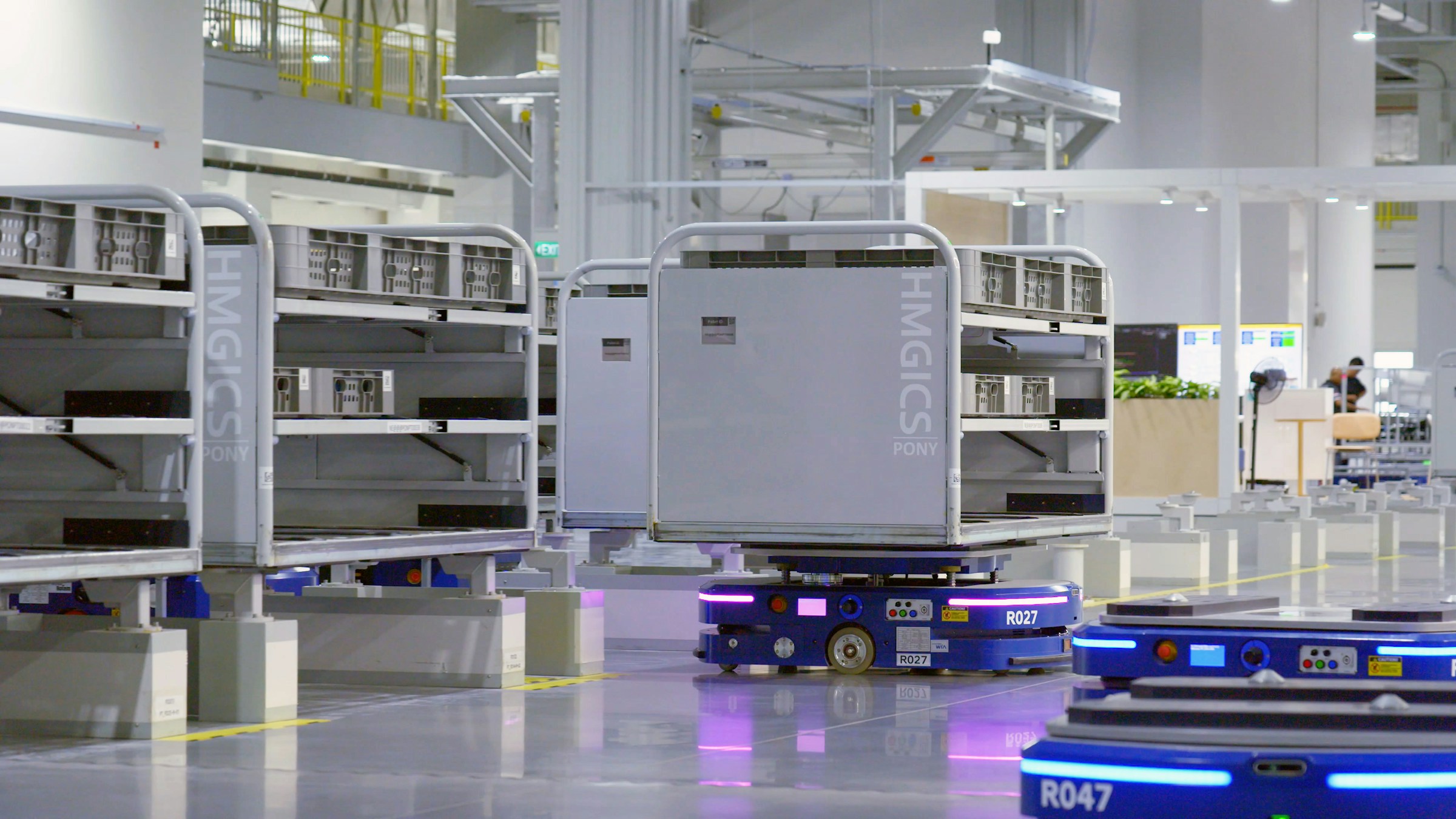
Robotics in your own production.
Small-batch work automates later than mass production, but it does automate. Operating turns into changing over and clearing faults.
Digital twins in engineering and commissioning.
Simulation before the build, virtual commissioning of the controls. That changes the order of the work, not just the tool.
Roles
Where the change lands
The centre of gravity differs from mass production: the largest shift is where the machine stands at the customer's site.
Service engineering and field service
Fault finding starts before travelling, with remote access and equipment data. On site the engineer justifies why a component is replaced now rather than in eight weeks. That is advisory work.
Engineering and design
Simulation and virtual commissioning move ahead of the first physical build. Design, controls and service work on one data model.
Mechatronics and assembly
More electrics, more sensors, more software states in final assembly. In-house commissioning becomes a pre-acceptance with a test record.
Machine operation and production
Machining centres and handling robots in small batches. Setting up, changing programmes and clearing faults fill more of the shift than operating.
In-house maintenance
Condition-based maintenance, diagnosis through controls and fieldbus rather than by sight and sound.
Sales and product management
An availability contract is priced differently from a machine and demands equipment data, maintenance logic and contractual risk together.
The target roles that follow are internal role profiles, not recognised training occupations. The starting point is regulated, the destination is defined by each company itself.
Skills
What is needed on top
Mechanical competence stays at the core. What is added sits at the edges: data, controls, the customer interface.
Equipment data and connectivity
- Reading machine data and recognising fault patterns
- Industrial communication, interfaces and network layout
- Remote access and diagnosis, secure and documented
Controls and robotics
- Control systems and programme structure
- Handling and cell safety
- Virtual commissioning before the build
Service as a product
- Planning and justifying condition-based maintenance
- Understanding and pricing availability as a commitment
- Advising and documenting at the customer's site
Detail from the training regulations
Why one cohort enters at two different points
Anyone who finished training recently brings a foundation in these four fields. Anyone who finished fifteen years ago does not necessarily.
324
recognised training occupations in Germany
4
standard occupational profile positions, mandatory in every one of them
Cohort fit
High, but only across site boundaries
In its own production, machinery is as cohort-ready as any industry: the same equipment, the same change, regulated prior knowledge.
In service, engineering and sales that flips. Per site, the target groups are too small for a dedicated measure.
A group only forms across works. Typically once three sites put their service engineers into the same cohort.
Our assessment, without varnish. High cohort fit, with an organisational precondition that a vehicle plant does not need.
Delivery
Qualification when half the target group is at a customer site
Machinery has a different availability problem from a vehicle plant: no shift roster, but a deployment plan driven by customer dates.
- Windows instead of shift models
- Service engineers are rarely free at the same time. What works are block weeks in the quieter part of the year and short units between two assignments.
- Location
- The practical part belongs on real equipment in your own works. Control logic and data analysis work remotely.
- Release from work
- Release runs through the deployment plan: the service manager blocks calendar weeks before sales fills them. Reverse that and the measure does not happen.
- Group size
- Smaller than in mass production. A viable group often only forms across several sites, which is exactly what cohort building is for.
Section 97 (2) BetrVG applies here too: where measures taken by the employer change the work so that existing knowledge no longer suffices, the works council co-determines the introduction of training measures. In multi-site companies, settle early which body is responsible.
Next step
The need exists. It is simply spread across too many sites.
The Transformation Scan captures the initiative and shows where enough comparable need comes together for one group.